NPF-Funded Research
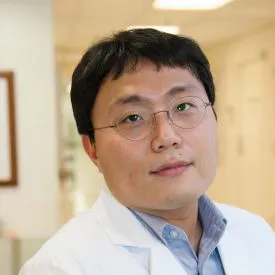
Principal Investigator: Jaehwan Kim, M.D., Ph.D.
Institution: University of California, Davis
Grant Mechanism: Discovery Grant
Funding Amount: $75,000
Project Start Date: October 1, 2026
Project End Date: September 30, 2028
Status: Active
Keywords: Psoriasis, Biomarkers, CVD, Gene Expression, Immunology, Inflammation
Project Summary:
Psoriasis is not only a skin disease. It triples the risk of heart attack and shortens life expectancy by four to five years. While current treatments effectively clear the skin, they often fail to eliminate this “residual” heart risk. We believe the answer lies in the fat tissue directly underneath the skin. We propose that this fat acts as a “hidden reservoir” of inflammation, pumping dangerous signals into the blood even after skin lesions disappear. Using cutting-edge technology, we will map these harmful fat cells for the first time to prove they drive systemic disease. Our goal is to shift the treatment paradigm: to save the heart, we must treat the fat, not just the skin, helping patients live longer, healthier lives.
How will your project help improve the lives of the 125 million affected by psoriatic disease?
People living with psoriasis carry a burden that goes far beyond the skin: their risk of heart attack is roughly three times higher, and it strikes younger. On average, psoriatic disease shortens life by four to five years. Today's biologic drugs are remarkably good at clearing skin — but every completed clinical trial testing whether they also lower cardiovascular risk markers has come up short. Clearing the skin, it turns out, is not the same as preventing heart disease.
Our project asks where that leftover, hidden inflammation is coming from. We believe the answer is the layer of fat sitting directly beneath psoriatic skin — a tissue no one has ever looked at closely in psoriasis. Using new technology, we will build the first cell-by-cell map of this fat in people with and without psoriasis, and with and without obesity, and connect what we find there to the inflammatory proteins circulating in their blood.
If we are right, this changes what “treating psoriasis” means for the 125 million people living with it. It would explain why heart risk persists after the skin clears, it would give clinicians a way to identify which patients still carry hidden inflammation, and it would point to a second treatment target — the tissue under the skin. The ultimate goal is straightforward: patients should not only get clear skin, they should live longer, healthier lives.
Why is psoriatic disease research important to you, personally? What role will this award play in your research efforts or career development?
I am a dermatologist before I am a scientist, and this question has a clinic room attached to it. In my psoriasis clinics, I have the privilege of telling patients that their skin is clear — that after years of covering up, they can wear short sleeves again. It is one of the most satisfying conversations in medicine. But I also know what the same patient's chart often shows: a body mass index above 30, and a cardiovascular risk that our treatment did not touch. That gap between what my patients feel and what their bodies are still doing is what drives my research. My research now follows that gap one layer deeper — into the subcutaneous fat that sits directly beneath the psoriatic plaques I biopsy every week.
The National Psoriasis Foundation has supported me at every inflection point of my career: a Discovery Grant in 2018 as a trainee, a Bridge Grant in 2020, and now this award as I establish my own laboratory. Each one arrived when an idea was too new to be fundable elsewhere, which is precisely the moment when support matters most. This Discovery Grant will let me generate the first single-cell atlas of psoriatic adipose tissue — the preliminary data I need for an NIH R01 focused on the skin-adipose axis, and the foundation of an independent research program aimed at the comorbidity that shortens my patients' lives.
Researcher Profile:
Jaehwan Kim, MD, PhD, is an Associate Professor of Dermatology at the University of California, Davis, and a staff dermatologist at the VA Northern California Health Care System, where he cares for patients with psoriasis and other inflammatory skin diseases.
Dr. Kim earned his MD and PhD and completed his first dermatology residency at Korea University College of Medicine in Seoul. He then trained in translational research at The Rockefeller University, earning an MS in Clinical and Translational Research as a KL2 Clinical Scholar in the laboratory of Dr. James G. Krueger, and completed his second dermatology residency at Albert Einstein College of Medicine / Montefiore Medical Center in New York before joining UC Davis in 2022.
As a physician-scientist, Dr. Kim uses single-cell and single-nucleus genomics to define the immune cells that drive psoriasis and its whole-body complications. His laboratory has identified the distinct pathogenic and regulatory Type 17 T-cell populations in psoriatic skin and shown how biologic drugs selectively modulate them, with recent work published in the Journal of Allergy and Clinical Immunology and the Journal of Investigative Dermatology. He is the recipient of an NIH/NIAMS K23 career development award and has previously been supported by a National Psoriasis Foundation Discovery Grant (2018) and Bridge Grant (2020).
Impact of NPF-Funded Research
The NPF has awarded over $30 million in research funding in recent years, with immeasurable impact on our community.
Read more
We Need Your Help
With your gift we can fund even more research to get better treatment and diagnostic options and someday, a cure.
Help fund critical research
NPF-Funded Research
Discover our other active research projects.
Learn more